A single afternoon on 28 October 2026 will put some of Singapore’s and Asia’s most influential luxury industry figures in the same room. The BTLuxe Edit – Future:Legacy, a symposium on luxury, wealth and legacy presented by The Business Times as part of its 50th anniversary celebrations, brings together founding-generation entrepreneurs, next-generation successors, hospitality innovators and art market specialists for panel discussions and fireside chats at Shangri-La Singapore. For anyone who works at the decision-making level of the luxury sector, the speaker list tells the story of where Asian luxury has come from and where it is heading.
The Conference and Its Power List
The BTLuxe Edit – Future:Legacy is organised by BTLuxe, The Business Times‘ luxury lifestyle supplement, and is presented by Schroders Wealth Management. The event is deliberately compact — limited to 150 guests — and positions itself as a working gathering for founders, family business principals, private bankers, wealth advisers, brand and hospitality leaders, developers, collectors and arts patrons, rather than a broad-audience conference.
The afternoon’s panel discussions will conclude with the unveiling of The BTLuxe Edit, a power list of 50 names and brands that the publication judges to have shaped Singapore’s luxury landscape and to be driving its future. Inductees span 10 categories: Architecture, Craft, Culture, Enterprise, Gastronomy, Hospitality, Interior Design, Patronage, Place-making and Wellness. The list includes legacy figures who built their reputations over more than 25 years alongside a newer generation redefining the experience of luxury. A closed-door dinner for inductees, partners and invited guests follows the main programme.
The Companies and Organisations Behind the Speakers
The speaker roster draws from across the luxury economy, covering conglomerates, independent hospitality groups, real-estate-led lifestyle development, the art market and regional hospitality.
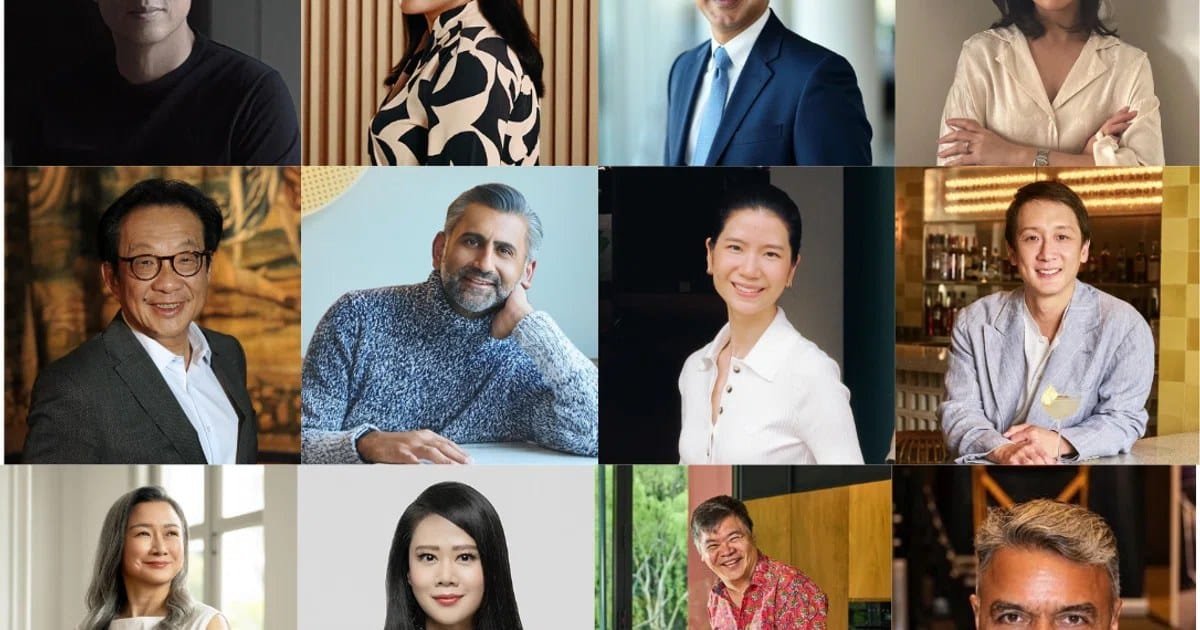
Ravi Thakran opens the symposium. He is described in the source as a luxury veteran, former chairman of LVMH Asia, and currently group CEO of DIAFA, a luxury hospitality and lifestyle platform. His opening conversation is intended to frame the afternoon’s core questions: how luxury’s meaning is evolving, how brand relevance is maintained and how Asia’s influence on the global luxury market is growing.
Francis Yeoh is executive chairman of YTL Corporation, the Malaysian-headquartered conglomerate with significant hospitality, infrastructure and real-estate interests across the region. He will appear in a fireside chat alongside his niece Yeoh Pei Xien, who holds the role of vice-president of strategy and transformation at YTL Hotels. Their conversation is focused on succession and legacy planning within a family business context — a topic directly relevant to the multi-generational luxury enterprises that make up much of Asia’s industry.
Wee Teng Wen leads Lo & Behold Group, a Singapore-based hospitality operator known for developing distinctive food, beverage and lifestyle venues, including projects that have repurposed heritage and overlooked urban spaces. Ashish Manchharam is associated with Elevate Capital. The source describes both as forward-thinkers who have helped transform some of Singapore’s forgotten buildings into vibrant lifestyle destinations; they will appear on a shared panel.
Sandy Assakul joins from Bangkok as one of the co-founders of Baan Trok Tua Ngork, described in the source as a trendy destination in the Thai capital, bringing a Southeast Asian regional perspective to the hospitality conversation.
Loh Lik Peng is associated with Unlisted Collection, an independent hospitality group with boutique hotels and dining venues across Singapore and internationally. He will appear in discussion with Chan Soo Khian, principal and founder of SCDA Architects and founder of the Soori hotels brand. Their panel addresses what the source describes as the new map of travel and hospitality in Asia.
The art market segment features Jasmine Prasetio, managing director for South-east Asia at Sotheby’s, and art collector Audrey Koh, discussing the rise of the Asian art market. Panel discussions across the afternoon will be moderated by senior journalists from The Business Times‘ editorial team.
What These Leaders Contribute to the Luxury Conversation
Taken together, the speaker line-up addresses three structural questions that the Asian luxury sector is actively working through.
The succession question sits at the centre of the Francis Yeoh and Yeoh Pei Xien session. Family-controlled enterprises dominate Asian luxury — in hospitality, retail, property and lifestyle — and the transfer of vision, not just ownership, from one generation to the next is an unresolved challenge for many of them. A public fireside chat between an executive chairman and a third-generation family member in a strategy role is an unusually candid format for examining this.
The place-making and adaptive-reuse question runs through the Wee Teng Wen and Ashish Manchharam session. Singapore has a limited stock of historic and industrial buildings, and the conversion of overlooked urban fabric into luxury-calibre lifestyle destinations has become one of the city’s distinctive contributions to the region’s hospitality scene. The Loh Lik Peng and Chan Soo Khian pairing extends this into the broader geography of Asian travel, where new hospitality nodes are emerging outside the traditional gateway cities.
The art market question addressed by Sotheby’s Jasmine Prasetio and Audrey Koh reflects the growing weight of Southeast Asian collectors and artists in what had long been a market centred on Western and East Asian participants. The regional art market’s expansion is both a cultural and a commercial development with direct implications for luxury retail, private banking and estate planning.
Singapore’s Role in Defining Asian Luxury
The choice of Singapore as the location for this gathering, and the composition of the speaker list, reflects a specific argument: that Singapore functions as the region’s decision-making centre for luxury, even when the brands, hotels and collections in question are physically located elsewhere in Asia.
Several of the speakers lead organisations based outside Singapore — YTL Corporation is Malaysian, Baan Trok Tua Ngork is in Bangkok, Sotheby’s South-east Asia covers a broad regional footprint — yet the conversation is anchored here. Singapore’s concentration of private wealth, its role as a regional headquarters hub for international luxury brands and its status as a destination for art, hospitality and architecture investment all contribute to that positioning.
The BTLuxe Edit power list itself, spanning 50 names and brands across 10 categories with inductees drawn from both legacy builders and a new generation, is an attempt to document that positioning formally. Whether the list, once unveiled at the 28 October 2026 event, is received as a credible account of who has shaped Singapore’s luxury identity or as one publication’s editorial judgement will depend on how the inductees and their peers assess its criteria. The categories — Architecture through to Wellness — are broad enough to include both commercial and cultural contributors, which will make the eventual composition worth examining.
For those working in Singapore’s luxury sector at a strategic level, the more immediate value may be the conversations the symposium enables rather than the list it produces. A gathering capped at 150 people, drawing from wealth management, hospitality, architecture, art and family enterprise simultaneously, is an unusual density of relevant decision-makers for a single afternoon — and that, as much as the speaker programme, appears to be the point.