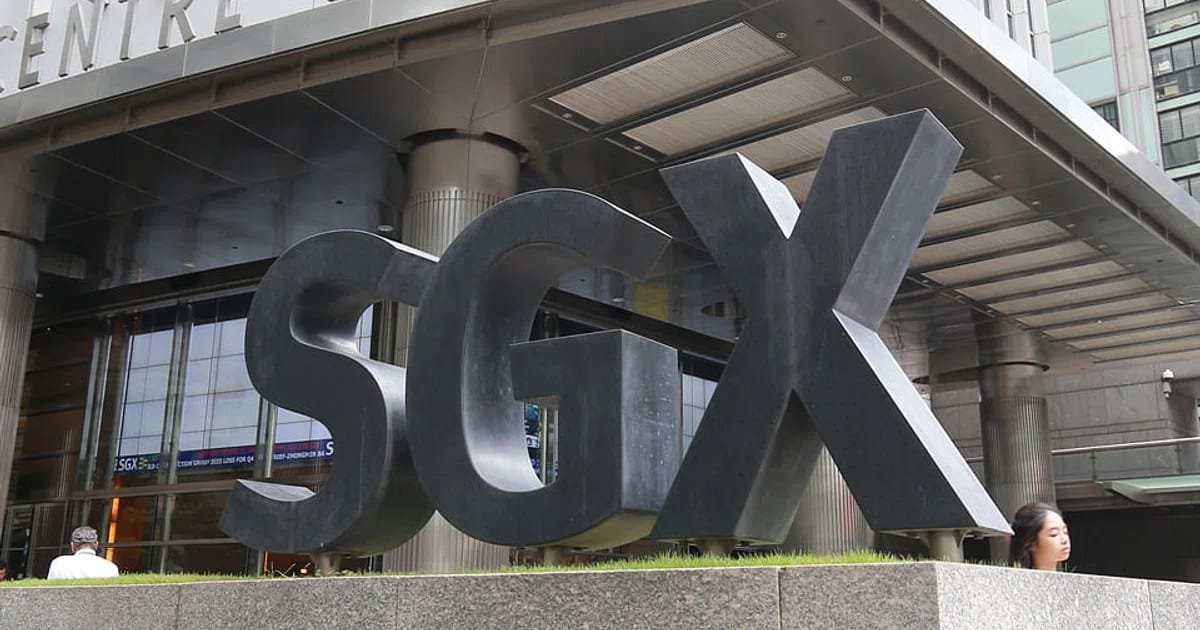
Singapore’s listed company leaders are facing a meaningful shift in how boards are expected to be structured, led and scrutinised. Proposals published on 27 October 2026 by the Corporate Governance Advisory Committee (CGAC) and Singapore Exchange Regulation (SGX RegCo) would, if adopted, impose mandatory requirements around the chairman’s role, cap the number of board seats any single director may hold, and require companies to publicly disclose how they manage capital beyond dividends alone. For industry leaders who chair or sit on SGX-listed boards, the window to respond closes on 27 January 2027.
The Proposals and the Figures Behind Them
The CGAC’s review, which began in 2025, was informed by discussions with directors, chief executives, chief financial officers and retail and institutional investors of listed companies. The resulting package of proposals targets several areas where current practice has fallen short of existing expectations.
The most immediate trigger concerns non-independent chairmen. In 2025, 70 listed entities — 11.4 per cent of the 615 entities surveyed — had a non-independent chairman but had not appointed a lead independent director, a step that the existing Code of Corporate Governance already recommends. The CGAC is proposing to move that recommendation into the mandatory SGX Listing Rules, removing the comply-or-explain option for this specific requirement.
On directorships, the data from 2024 showed that 25 directors held more than five SGX-listed board seats, and 49 companies — 8.1 per cent of 604 companies surveyed — had at least one director exceeding that threshold. The proposed cap of five directorships would count seats on SGX-listed companies, overseas-listed companies, and boards of managers of listed real estate investment trusts or business trusts. The CGAC is still consulting on whether this cap should be a mandatory Listing Rule or a comply-or-explain code provision.
CGAC, SGX RegCo and the Regulatory Framework
The proposals sit within Singapore’s two-tier governance framework. Compliance with the SGX Listing Rules is mandatory; the Code of Corporate Governance operates on a comply-or-explain basis. The distinction matters here because several of the CGAC’s proposals would shift provisions from the softer code into the harder rulebook.
Tan Boon Gin, Chief Executive Officer of SGX RegCo, stated that the proposed rule amendments “would add structure to how boards think about leadership and accountability, thus fostering a culture of strong board governance,” as reported by The Business Times on 27 October 2026.
The CGAC noted that other markets set high expectations in this area. Both the UK and Australian corporate governance codes expect the chairman to be independent, and where that is not the case, those codes require additional independent leadership arrangements such as a senior or lead independent director. The CGAC has decided against mandating an independent chairman for all Singapore-listed companies, citing the local market landscape, but it is proposing comparable safeguards through the lead independent director requirement.
Where the chairman also serves as CEO, a new code provision would require companies to explain how the chairman’s responsibilities are effectively fulfilled and disclose any safeguards in place. Examples cited include separating the responsibilities of the two roles and excluding the chairman from decisions concerning his or her own performance or remuneration.
What the Proposals Would Require of Board Leaders
The full set of proposed changes covers six areas in the SGX Listing Rules and several additional code provisions. The table below summarises the principal Listing Rule proposals as described in the CGAC and SGX RegCo consultation document dated 27 October 2026.
| Proposed Change | Mechanism |
|---|---|
| Cap of five directorships across all listed entities (SGX and overseas) | Mandatory Listing Rule or comply-or-explain — under consultation |
| Non-independent chairman must be accompanied by a lead independent director | Mandatory Listing Rule (proposed) |
| Audit, nominating and remuneration committees each chaired by an independent director with an independent majority | Mandatory Listing Rule (proposed) |
| Explicit disclosure of selection criteria, rationale, diversity considerations and nomination process for each director appointment | Mandatory Listing Rule (proposed) |
| Annual report to state whether directors undertook relevant professional development and describe those activities | Mandatory Listing Rule (proposed) |
| Companies to maintain and disclose a capital management policy, with deviations explained | Mandatory Listing Rule or comply-or-explain — under consultation |
On committees specifically, the proposals would require each of the audit, nominating and remuneration committees to be chaired by an independent director and to have an independent majority. The existing code separately recommends that all nominating committee members be non-executive directors and that audit and remuneration committees comprise only non-executive directors — those recommendations remain code-level provisions.
The capital management proposal builds on a rule SGX RegCo introduced in September 2026 requiring listed issuers to maintain a dividend policy and describe it in their annual reports for financial years commencing on or after 1 January 2027. The CGAC’s broader capital management policy disclosure would place dividend decisions alongside other capital allocation priorities — reinvestment, acquisitions, debt reduction and balance sheet management — to give investors a clearer picture of how competing uses of capital are weighted.
Which Singapore Leaders and Companies Are Directly in Scope
The Business Times reported on 27 October 2026 that a number of well-known Singapore-listed companies currently have non-independent chairmen. The following names were compiled by The Business Times and are reproduced here as reported; they are not an assessment of governance quality or compliance status.
| Company | Chairman (as reported by The Business Times, 27 Oct 2026) |
|---|---|
| Banyan Tree | Ho Kwon Ping |
| City Developments Ltd | Kwek Leng Beng |
| Cortina | Lim Keen Ban |
| Del Monte Pacific | Rolando C Gapud |
| ecoWise | Lee Thiam Seng |
| Genting Singapore | Lim Kok Thay |
| Goodland | Ben Tan Chee Beng |
| Ho Bee Land | Chua Thian Poh |
| Hock Lian Seng | Chua Leong Hai |
| Hong Leong Asia | Kwek Leng Peck |
| JustCo | Kong Wan Sing |
| Kim Heng | Thomas Tan Keng Siong |
| Koda | James Koh Jyh Gang |
| Raffles Medical | Dr Loo Choon Yong |
| Singapore Shipping Corp | Ow Chio Kiat |
| Stamford Land | Ow Chio Kiat |
| TrickleStar | Tan Ong Huat |
| UOL | Wee Ee Lim |
| Venture Corp | Wong Ngit Liong |
| Wilmar International | Kuok Khoon Hong |
Under Singapore’s current framework, a chairman is considered not independent if he or she has ties to executive management, substantial shareholders or commercial dealings, is related by family to the CEO or key executives, or has served on the board for an extended tenure. The proposals do not change this definition; they change what companies with such a chairman are required to do about it.
Broader Governance Expectations and Singapore’s Capital Market Direction
The CGAC’s package extends beyond chairmen and directorships. Additional proposals introduced at the same time include:
- Risk disclosures: A new code provision would require boards to disclose their assessment of principal and emerging risks and explain how these are managed or mitigated. Practice guidance would be enhanced to address risks linked to artificial intelligence and sustainability.
- Long-term value creation: The code would be updated to reflect explicitly that boards are responsible for setting strategic direction and overseeing long-term value creation.
- Investor engagement: Companies would be expected to engage investors proactively and regularly on strategy and plans, and to provide timely, accessible assessments of performance, financial position and prospects.
- Corporate website disclosures: A new code provision would require companies to publish up-to-date financial and corporate governance information on their websites.
The CGAC stated that these measures are intended to complement initiatives from the Equities Market Review Group aimed at strengthening Singapore’s equities market more broadly.
For Singapore’s industry leaders who chair boards or hold multiple directorships, the practical implications are concrete: some will need to restructure committee leadership, appoint lead independent directors, or reduce their board seat count before any new rules take effect. The consultation period runs until 27 January 2027, giving companies and individuals several months to engage with the process before final rules are determined. Whether the directorship cap and capital management disclosure end up as mandatory rules or comply-or-explain provisions will depend significantly on the feedback received — making active participation in this consultation period a meaningful governance decision in itself.