A Singapore startup launched in July 2026 is asking brands to stop fixating on follower counts and start measuring whether a creator’s audience actually matches their target market. Influencees Pte. Ltd. has built a subscription platform that connects brands with content creators through weighted audience metrics, and it has attracted more than 4,700 users in its first few months of operation. For anyone tracking the evolution of influencer marketing in Southeast Asia, the company’s data-first approach and regional expansion plans make it worth watching.
The Platform and Its Founders
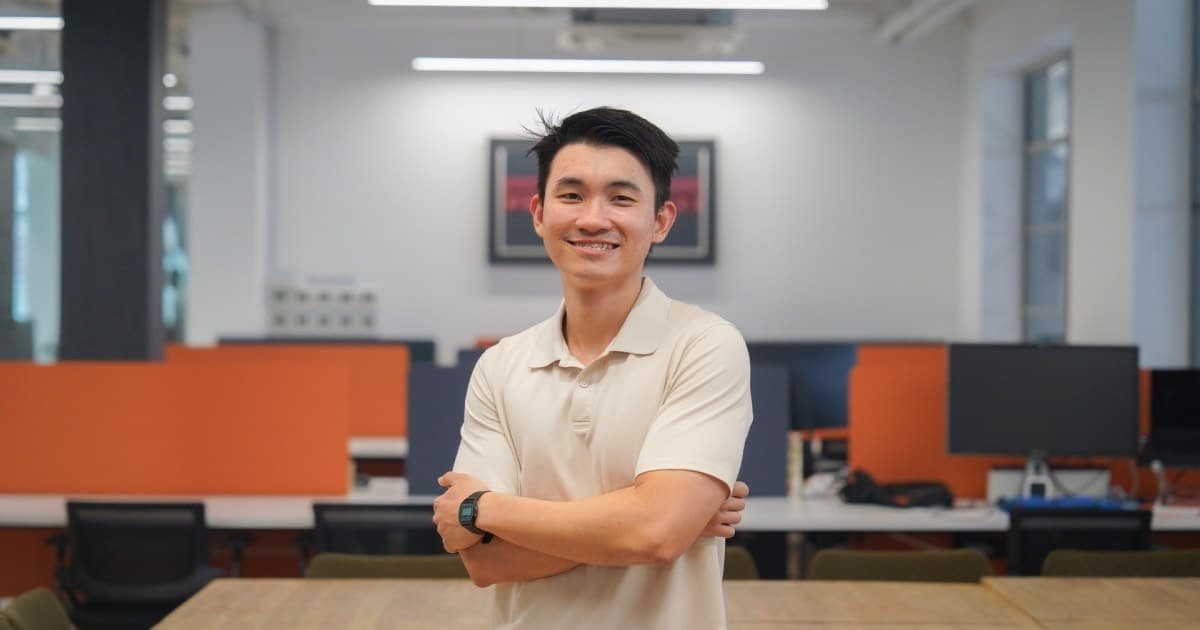
Influencees Pte. Ltd. was co-founded by Davidson Chua and Edwin Koh in 2026. Chua previously ran Autosave Pte. Ltd., an automotive platform serving enthusiasts, sellers, and service providers in Singapore, before identifying what he saw as structural gaps on both sides of the influencer marketing relationship.
Speaking to Singapore Business Review in October 2026, Chua described the platform’s philosophy in straightforward terms: “We are trying to help the brands see that impact more from the angle of the people that are being influenced.” The comment captures the company’s core differentiation — shifting campaign evaluation away from a creator’s total follower number toward the relevance of that creator’s actual audience to a brand’s intended customers.
As of the time of the Singapore Business Review report (published 23 October 2026), Influencees had onboarded more than 4,700 users since its July 2026 launch. Creators account for approximately 70% of that user base, with brands making up the remainder.
What the Platform Offers Brands and Creators
Influencees operates on a subscription model and provides separate tool sets for each side of the market it serves.
For Brands
Brand subscribers can search for creators by niche and campaign type. The platform’s weighted audience metrics are designed to assess whether a creator’s followers align with a brand’s target market — a response to what Chua described as the industry’s longstanding reliance on vanity metrics. Beyond discovery, brands can manage the full campaign workflow through the platform: planning, creator selection, communications, reporting, and conversion tracking.
For Creators
The platform addresses a problem Chua identified among individual creators: many struggle to scale their operations because they lack the infrastructure that larger agencies take for granted. Influencees gives creators access to customer relationship management software, media kit tools, and market-rate benchmarks to help them prepare commercial proposals and negotiate agreements with brands. Marketing agencies, he noted, often tracked campaign performance manually across multiple social platforms — a process the platform aims to streamline.
Community Building and the Hackathon Model
Influencees has also used community events to grow its user base and demonstrate its approach in practice. In July 2026, the company organised a hackathon in which creators were given brand challenges and asked to develop content within their own areas of expertise and audience style — rather than producing straightforward product promotions.
Chua said the format served both parties: brands received a range of content ideas, while creators produced material suited to their audiences. The event model reflects a broader argument the company is making — that campaigns work better when creators are given room to engage their own communities authentically rather than acting purely as advertising channels.
This argument has some support in earlier regional research. A 2019 Meltwater study on Southeast Asian beauty buyers, reported by The Business Times, found that influencers were preferred over celebrities for brand collaborations because of higher engagement and stronger credibility among niche audiences. That study also highlighted the importance of going beyond follower numbers to consider engagement rates, true reach, and demographic data — a direction Influencees has built into its product. The Meltwater findings relate to the beauty sector in 2019 and should not be read as a current cross-industry benchmark, but they point to a shift in regional marketing thinking that predates the Influencees launch by several years.
Singapore Base, Southeast Asia Ambitions
Influencees is currently focused on establishing its Singapore presence, but its stated expansion trajectory is explicitly regional. According to Chua’s comments to Singapore Business Review in October 2026, the company plans to enter Malaysia in 2027, with the aim of more than doubling its user base as part of that move.
The longer-term roadmap is more ambitious: the company aims to be operating in one to two additional Southeast Asian markets within three years and across five to six markets in the region within five years.
Cross-border campaign capability is central to this strategy. Chua described a two-directional use case: overseas brands can use the platform to identify creators with local audiences in markets they want to enter, while creators gain access to brands seeking to reach consumers outside their home countries. This positions Influencees not just as a campaign management tool but as a cross-market discovery layer for influencer marketing across Southeast Asia.
What This Means for Singapore’s Influencer Marketing Sector
Singapore has become a natural launchpad for marketing technology companies targeting Southeast Asia, given its position as a regional commercial hub and its concentration of both international brands and digitally active consumers. Influencees enters a market where influencer marketing has become a standard line item in many brand budgets, but where the tools available to manage it — particularly for smaller creators and mid-market brands — have often lagged behind the industry’s growth.
The company’s focus on audience relevance rather than reach volume addresses a genuine operational gap. Brands frequently report difficulty verifying whether a creator’s followers actually represent their target customer, and creators without agency backing often negotiate without reliable data on market rates or campaign benchmarks. Influencees is positioning its subscription platform as the infrastructure layer that fills both gaps simultaneously.
Whether the platform can sustain its early momentum as it moves into more competitive regional markets will depend on how effectively its audience metrics hold up against established players in those markets, and whether its user base grows quickly enough to make creator discovery meaningful for brands. The Malaysia expansion planned for 2027 will be an early test of both. With a base of more than 4,700 users built in roughly three months from a Singapore launch, Influencees has at least demonstrated initial market traction — and its founders’ stated ambition to reach five to six Southeast Asian markets within five years gives it a clear regional benchmark against which its progress can be measured.