The Real Picture of Singapore’s Business Scene More Than Just the CBD Skyline
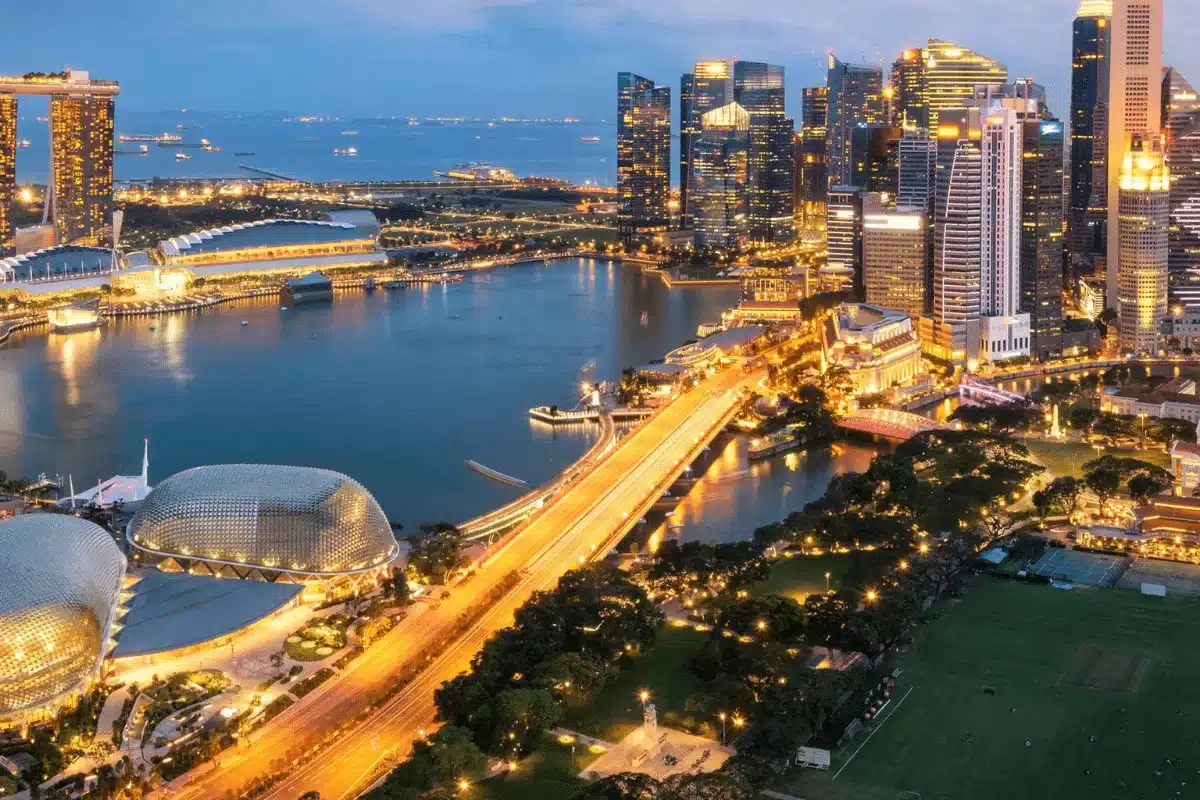
If you have made a recent visit to Raffles Place, Singapore, you can appreciate the swift movement of people among the glass towers creating a cinematic experience reminiscent of a financial brochure. This experience only represents the tip of the iceberg. The Singapore enterprise landscape overview has a much larger reach and much busier feel than simply having banks in Singapore. It can be thought of as a three-layer cake; at the top you have the large international brand names
In the middle you have many hardworking local businesses. At the bottom, you have a very loud, active, and aggressive start-up ecosystem disrupting the industry. For all our friends from Malaysia who are looking at the situation from the outside and asking themselves “Wah how to even enter”? Let’s break it down “kopitiam” style.
It’s Not Just MNCs: The SME Backbone

Many people think primarily of DBS Bank, OCBC Bank and UOB Bank as large corporations. The next companies that usually come to mind are Grab Holdings, Sea Limited and Singapore Telecommunications. However, just as many people have high expectations for the “big” companies to create jobs. There is a plethora of small and medium-sized enterprises (SMEs) creating employment and thus supporting the economy.
It is important to note that nearly 99% of all enterprises in Singapore are classified as SMEs. While SMEs are only responsible for about 65%-70% of the workforce’s employment in Singapore. This is still a huge amount of people when you consider that the largest enterprise in Singapore can employ thousands of people. Consider the small hawker stall at your local hawker center, or the small hardware store located in the neighborhood’s heartland. These are both SMEs. Also, consider the logistics company that delivers packages to you after you have purchased something online. That is also an SME.
There are many examples of SMEs than just the small neighborhood businesses that comprise the bulk of the SMEs in Singapore. For all intents and purposes, the examples above cannot be referred to as small even though they may qualify as an SME. Some SMEs have regional offices or operate throughout the whole country. However, the vast majority of SMEs are local.
Not only are SMEs a key contributor to the economy, but they are also a crucial part of the MNC economy. For example, without SMEs, MNCs would not have anyone to rent office space from or sell them coffee. To further highlight the significance of SMEs within the entire economy, you will often see the establishment of various SME government assistance programs. Such as the Enterprise Financing Scheme and SME grants.
In Singapore enterprise landscape overview how the Ecosystem is a “Sandbox,” Not a Jungle
Many entrepreneurs’ view business as a contest where the only way to win is to eliminate your competition. They believe that there is only one way to be successful. That is through survival of the fittest. One major difference between Singapore and the rest of the world is that doing business in Singapore is not based on the jungle model. Rather it is similar to going to a playground that the government has built for you, and where there will be plenty of help available for you to play the game of business.
For example, if you want to create a fintech business, you do not have to compete with anyone in order to get your business started. Because the Monetary Authority of Singapore (MAS) has created sandbox rules for you to test your product without having to pay a fine if it does not work as expected. As a result, you have significantly reduced your level of risk associated with starting your business. In addition, companies in Singapore such as Google, Microsoft, and RTX Corp (which recently invested another $139 million in its aerospace operations) know exactly what is needed for them. They help to operate in Singapore and have no fear of surprises because the government has clear guidelines on how to operate their businesses.
Entrepreneurs who live in Singapore have many different types of grants available to them for their startup businesses. In fact, the government recently added to the types of grants available to new businesses by announcing the “EDGE” grand. That combines many old grant programs into one application so the entrepreneurs will have less to learn about the different grant program requirements. Finally, the government subsidizes you if you want to digitize and has tax incentives. And also if you want to grow outside of Singapore.
Right Now, Everyone is Talking About AI
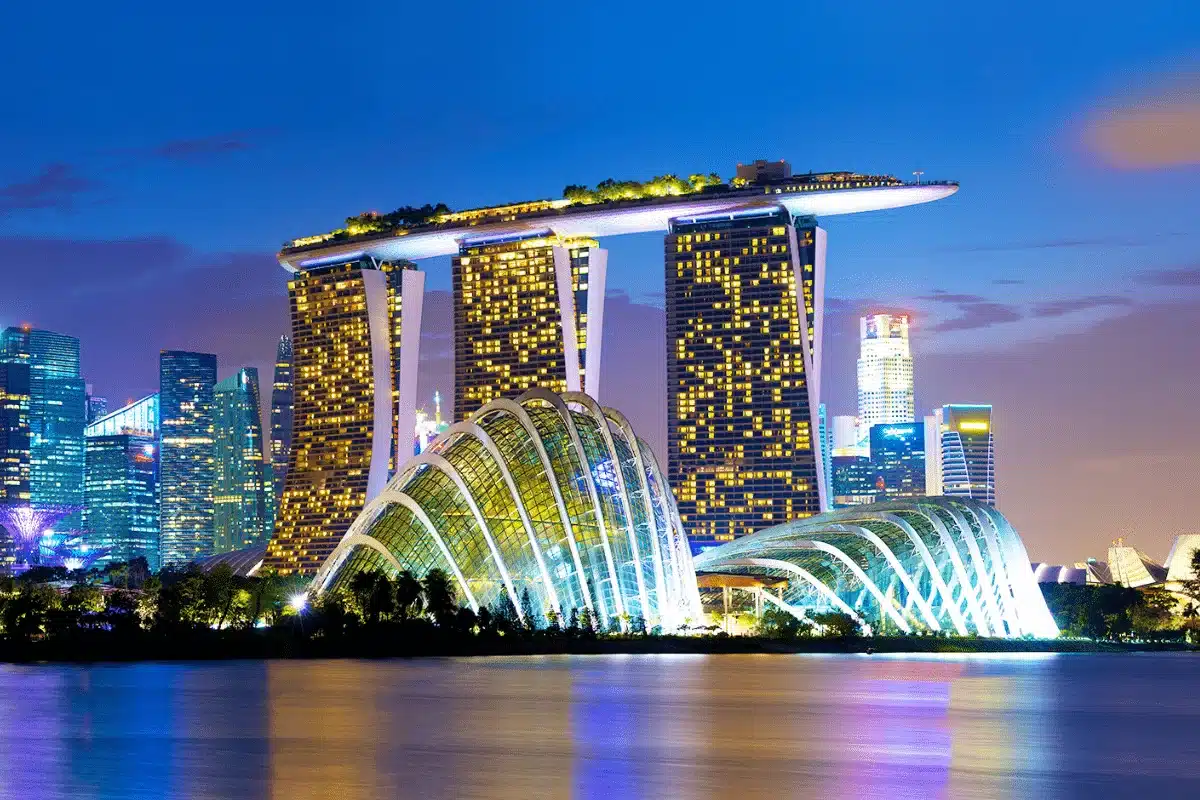
Currently, AI is being discussed at every business conference taking place in Singapore, making it undoubtedly the hottest topic in 2026. Investment by the government into the development of artificial intelligence (AI) was announced in the 2026 Budget announcement with a commitment. Which to establish a National AI Council (with the Prime Minister as Chair) and billions of dollars in research funding for R&D activities focused on developing new types of AI. Plans to develop a distinct AI Park at One-North, called Kampong AI. Which are also under consideration, which will host many of the world’s most innovative technologies.
Why Should This Matter for Enterprise Development in Singapore? The fundamental change from how small businesses will operate is enormous. By way of illustration, there is now an AI Champions Program, in which selected local companies can access the resources needed to fully implement AI technology within their businesses. This resource allocation will include both financial assistance and consulting support. The conversation has shifted from whether or not to employ technology (as existing businesses are already doing) onto how extensively can technology be employed.
Interestingly, banks appear to be noticing these trends. A DBS Bank survey revealed that around two-thirds of all SMEs are already using AI in some manner. Even if that is only employing tools such as ChatGPT merely for typing e-mails. The barrier to entry into AI continues to lessen.
So, Which Industries are Actually Booming?
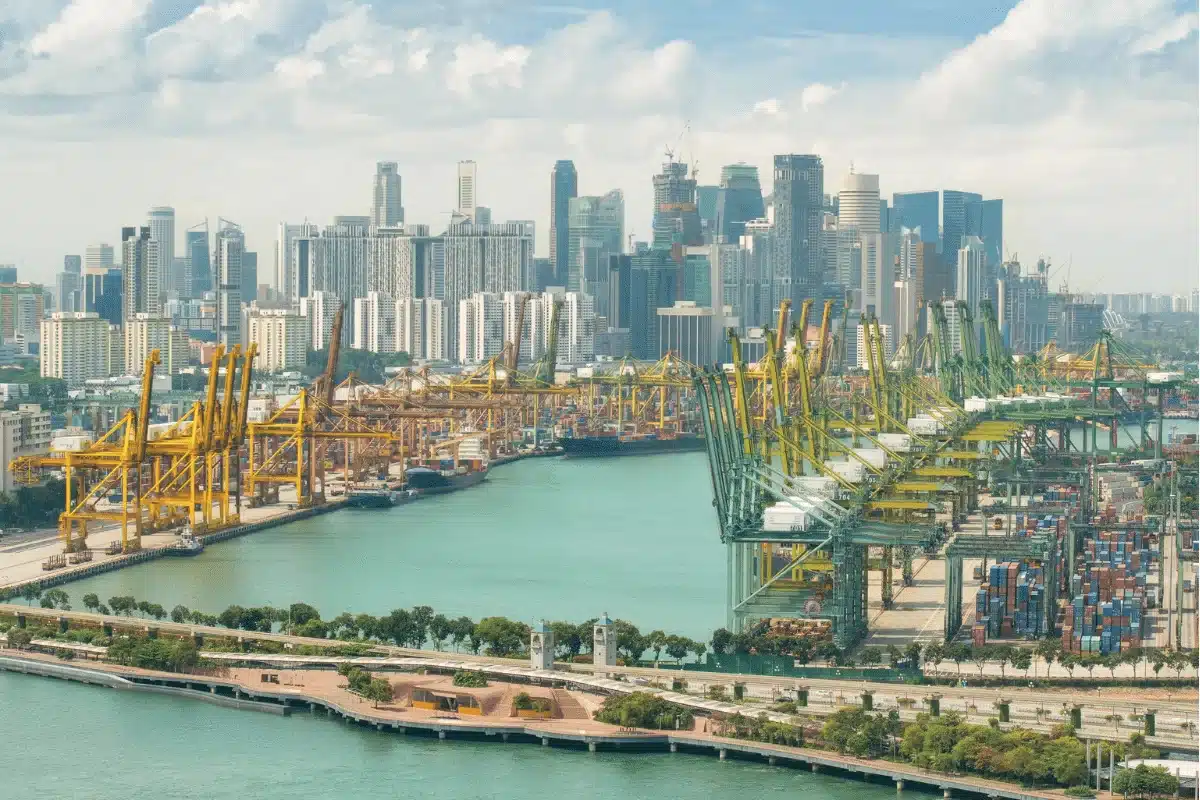
Would you like to know where money is being spent? Below is a simple breakdown of the industries in Singapore. Finance & Insurance (21%-22%) is by far the largest industry. In this sector are banks, investment funds and wealth management firms. Wholesale & Retail Trade (16%), Singapore’s position as a transit point for numerous varieties of goods makes this the second largest industry.
Now let’s look at what’s happening in the “New Economy”. Johor-Singapore Special Economic Zone (JS-SEZ), this has significant implications to expand the business environment beyond Singapore. As it will link together the investment dollars and data centers of Singapore with Johor’s land and labor resources. Advanced Manufacturing, RTX is just one company that is growing and the government is supporting the Semiconductor sector financially. Energy & Decarbonization which Singapore has allocated $800 million for Technology Development for low-carbon technologies. Thus, if you are involved in solar, hydrogen or carbon capture, Singapore wants to be your testing center.
Is It Easy to Start Something Here?
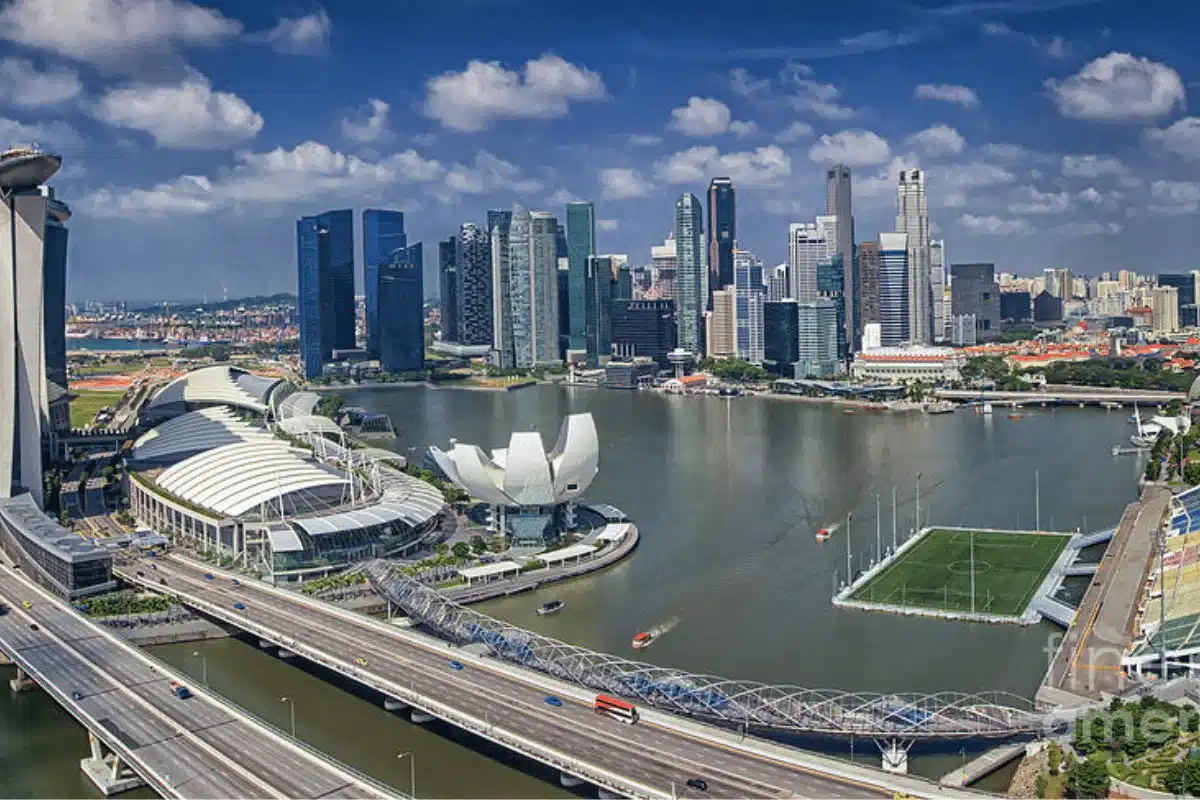
Many individuals inquired about entrepreneurship in Singapore. Is it costly? Certainly. However, is it “achievable” now more than ever. The demographic composition of business in Singapore has begun to change; it is becoming younger. The traditional guard of “trading companies” still exists, but there is also an emerging group of founders developing new technology.
The government has recently replenished the Startup Singapore Equity Fund by adding an additional $1 billion. That is not a trivial amount. The fund is designed such that it co-invests with private venture capitalists. If a venture capitalist likes your company but believes it is too risky, the government will match the venture capitalist and provide the required funds. Thus, reducing the apprehension of an investor.
To assist in the “scale-up” phase of your business, the government has established the second Anchor Fund ($1.5 billion) to induce high-growth companies. To do their public offering on the Singapore Stock Exchange (SGX) rather than to go to New York or Hong Kong for their public offering. Thereby enhancing the number of companies listed and traded on the SGX. The cost of doing business is high in Singapore, and the availability of talent is highly competitive. However, if you have a business plan that is sound, particularly in the areas of technology or green energy, the support provided by the government is among the most aggressive in Asia for those who are trying to start a successful business in Singapore.