Why the Platform You Choose Determines Contract Renewal
While having tea with export business owners in Klang Valley, one concern kept coming up repeatedly: how to choose the right Carbon Offset marketplace. As ESG clauses quietly make their way into contracts, many SMEs are discovering that the platform they choose can directly influence audit outcomes and contract renewals.
- 1️⃣ The Logic: Why do companies actually need a Carbon Offset marketplace?
- 2️⃣ What most people don’t know: How blockchain solves the “fake carbon” problem
- 3️⃣ Practical Breakdown: The reality of how to buy carbon offset online
- 4️⃣ A Simple Metaphor: What exactly is carbon offset net zero all about?
- 5️⃣ Common Misconceptions: It’s not just about the cert; auditors care about traceability
Many are asking: Can you really buy and sell carbon? Here is the logic
Actually, many people feel a bit strange when they first hear about “buying carbon”: I emit CO2, and I can just pay some money to offset it? It sounds a bit like those old “indulgences” where you pay to be forgiven. In reality, it’s not like that. You can think of it as a form of “cross-border mutual aid.” For example, if you run a factory in Selangor, you will inevitably have carbon emissions; meanwhile, far away in Indonesia or Africa, someone is protecting forests or building wind farms. These environmental projects are actually reducing carbon for the planet, and they need funds to keep going. Through a carbon offset marketplace, you provide the funds to support these projects, and they transfer the reduced carbon credits to you. On paper, your emissions are offset. For businesses pursuing carbon offset for companies, this is currently the most immediate way to achieve compliance.
A common situation: Fearing you’ve spent money on “fake air”
What bosses worry about most usually isn’t the price, but whether it’s “real.” Let’s be honest, carbon credits are something you can’t see or touch. What if the credits generated by one project are sold to three different people? This “double counting” issue has happened before in the carbon offset marketplace Asia. In such a situation, units like Carbon Core usually utilize immutable blockchain technology to write every verified carbon offset record into a underlying protocol, allowing companies to directly take this transparent data to deal with international audits. Simply put, this blockchain carbon offset model is like issuing a “Digital ID Card” for every ton of CO2. Once you place an order through a platform like carboncore.io, the system marks on the chain that this ton belongs to you and has been retired. This tokenized carbon offset model solves the nagging doubt in every boss’s mind: what I bought is real, and auditors worldwide can verify it.
Just like online shopping: How to buy carbon offset online is easier than you think
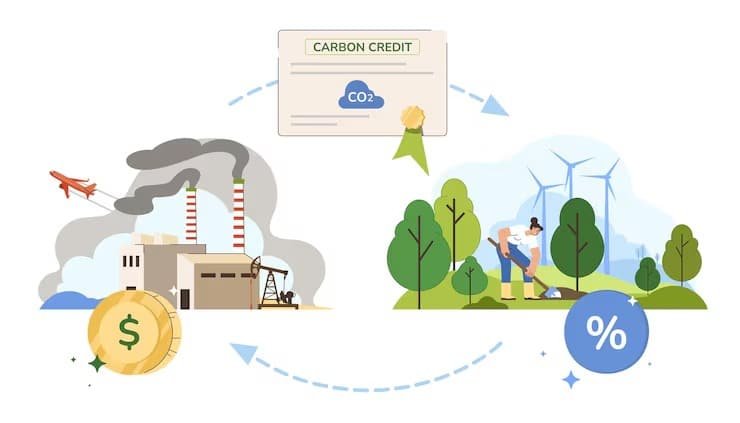
Many people think dealing with ESG stuff requires hiring expensive consultants for months of meetings. Actually, digital platforms have simplified the process significantly. Bosses only need to know roughly how much their emissions are, and they can browse through projects on a carbon offset Malaysia related platform. It’s just like booking a hotel online. You pick a forest conservation plan or a renewable energy project that you like, check its Vintage (project year) and certifying body, and place your order. For companies needing to handle a carbon offset ESG report, this convenience is a life-saver—especially when a big client suddenly demands a report by next week.
Common misconception: Is buying offsets enough for Net Zero?
I need to clarify a small concept here. Many people think that as long as I buy enough credits in a Carbon Offset marketplace, my company is automatically carbon offset net zero. In reality, Net Zero is a longer-term goal. To put it simply, you must first work hard to reduce emissions (like switching to LED lights or optimizing logistics routes), and only then do you use carbon offsets to handle the “unavoidable” emissions that remain. International auditors want to see that you, as a boss, are managing your environmental impact with intent, rather than just throwing money at the problem. This attitude is often the key to winning big contracts.
Insider tip: Cold data is often more powerful than a middleman’s word

To be honest, in these circumstances, digitalization and transparency are a company’s best shield. We used to be used to listening to project introductions in coffee shops, but nowadays, you need data that can pass an audit. When you can produce a certificate based on blockchain proof and show your client that every ton of your carbon offset is traceable, the sense of professionalism is on a completely different level. Digital platforms don’t just save you from tedious manual coordination; most importantly, they provide an “audit trail” that keeps you safe even if you’re scrutinized three or five years down the road.
Official Website: Carboncore.io
💬 Details You Might Be Interested In
We’ve compiled some common questions bosses have when dealing with decarbonization.