Why Malaysian SMEs Can’t Just Look at Price for ESG? Deciphering the Real Risk-Control Logic in the Carbon Market
Recently, the conversation shifted to business challenges, and everyone inevitably mentioned a “high-level” term: ESG. Especially for those involved in exports or multinational supply chains, failing to have some form of green certificate or Carbon Credit feels like losing a seat at the negotiating table. However, when it comes to actually spending money on them, most feel uncertain. The most frequent question asked is: Is buying carbon credits risky?
- 1️⃣ Carbon credits aren’t common commodities; owners fear buying unrecognised “air certificates.”
- 2️⃣ Credits failing audits are often due to a lack of data transparency.
- 3️⃣ Project failure and double counting are the biggest headaches in the industry.
- 4️⃣ Platforms are using blockchain to ensure every emission reduction is traceable.
- 5️⃣ Don’t just look at the price; understanding project details and tracking is key to risk control.
What Many Don’t Realize: Carbon Credits have “Originals” and “Counterfeits”
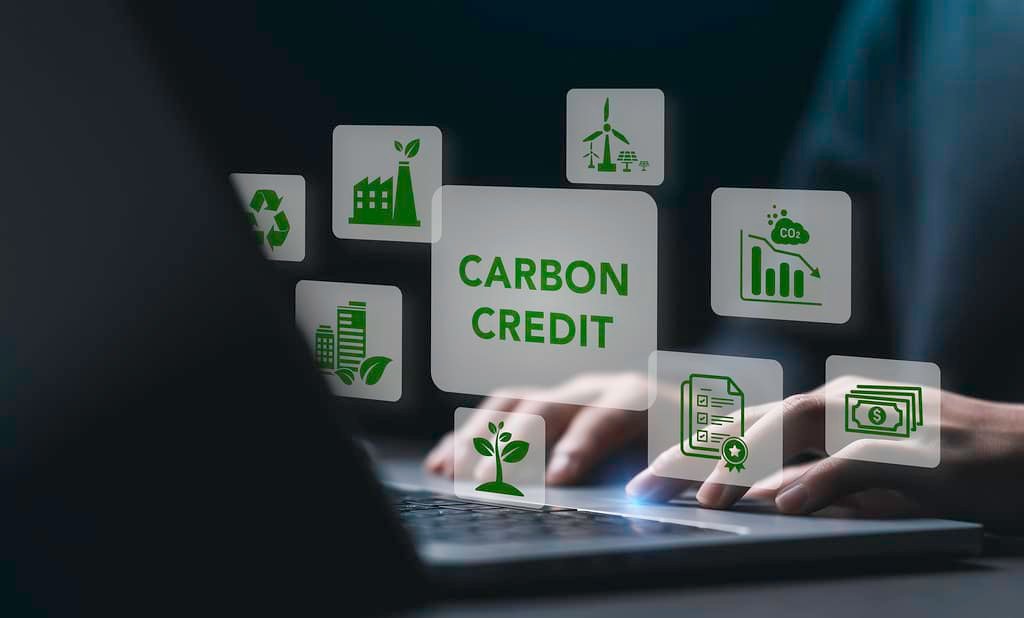
Carbon credits aren’t like stocks—you’re really buying the quality of the project behind them. If the project is fake, failed, or unverified, the credit is worthless. Many buyers skip checking verification reports and later discover fraud. In Malaysia, be cautious of ultra-cheap offers: ask where the project is and whether it’s certified by bodies like Verra or Gold Standard. If it’s just an unknown certificate with weak additionality, international buyers may not recognize it at all.
The Biggest Fear: When the Auditor Shakes Their Head
The most troublesome part of business is the audit. Many companies buy carbon credits to make their Annual Reports look good and prove their ESG commitment. But here is the problem: if what you bought doesn’t meet Compliance Risk requirements, the Auditor might reject it during your financial review. In the end, you’ve spent the money, but your ESG report still fails—that is the real loss. Furthermore, international scrutiny on “Greenwashing” is at an all-time high. If a company is caught buying fake credits, its brand image will plummet. In such cases, entities like carboncore usually use blockchain technology to tokenize carbon credits, recording the “life story” of every credit on-chain. This makes every transaction traceable, significantly reducing the difficulty and risk for auditors during verification.
Why “Cheap Stuff” is Often a Trap?
Let’s be honest: you get what you pay for. Some carbon credits are sold at a very low price because they are “old models.” For example, some projects were done ten years ago, and their standards no longer meet current requirements. Or, the project simply hasn’t undergone rigorous third-party Verification. What many don’t know is the phenomenon of “Double Counting.” The same project might be sold on Platform A and again on Platform B. If you buy these “second-hand” credits, your money is essentially gone when it comes to the audit. To avoid this, industry insiders look for a “Retirement Certificate,” ensuring the credit is taken out of circulation once used. Basically, you can’t be stingy—you need to buy with clarity.
Can Blockchain Solve the “Trust Crisis”?
Many in the industry are talking about carboncore, and the focus is on how it uses blockchain to fill the “holes” of the traditional market. It’s common for a project to be in South America while the buyer is in Malaysia, with multiple layers of agents in between, making information very opaque. Previously, we could only rely on PDF reports to prove a project was real, but PDFs can be edited. Now, through blockchain, every carbon credit—from creation and verification to purchase and retirement—is recorded clearly on-chain. Nobody can deny the transaction. It shifts “trust” to code rather than an agent’s word. While the tech is still spreading, this transparency gives many worried business owners peace of mind.
How Business Owners Can Control Risks in ESG?
Finally, if you plan to enter the carbon credit market, don’t just listen to an agent’s pitch. First, look at your objective. Is it to satisfy the supply chain requirements of European buyers, or for CSR? If it’s for foreign trade, you must ask which Registry the buyer recognizes; don’t just buy blindly. Second, avoid “package deals” from private middleman and opt for transparent Marketplaces. Honestly, the carbon market is like the real estate market—there are established “sub-sale” units (verified credits) and “under-con” units (future credits). If you are a novice, it’s recommended to start with mature, reputable projects backed by blockchain tracking. Even if the price is slightly higher, at least you won’t have to worry about audit rejection or project fraud.
Official Website: Carboncore.io
💬 Can Blockchain Truly Help Me Avoid the 2-5 Year Project Failure Risk?
A compilation of the 5 most critical questions regarding carbon market compliance, audit submission requirements, and 2026 latest practical doubts.